
Manage View Templates
Manage View Templates lets you set up view templates that are customized to different users.
| Key Term: |
|
| Description: |
|
| Related topics: | |
| Application: |
|
How-to: Manage View Templates
Easily manage who gets to see what, and here’s how to do it.
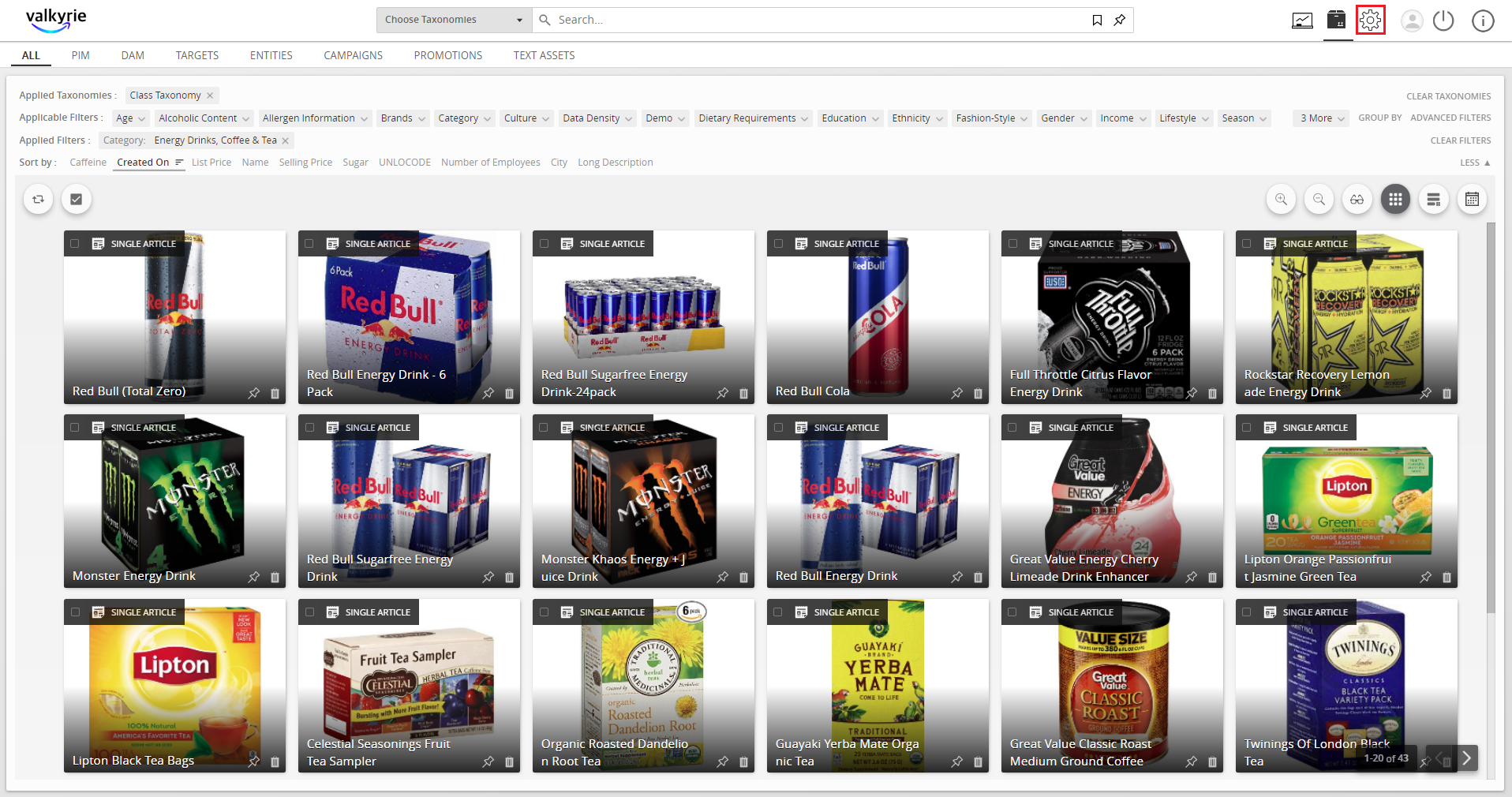
- Click the Gear icon to go to Settings.
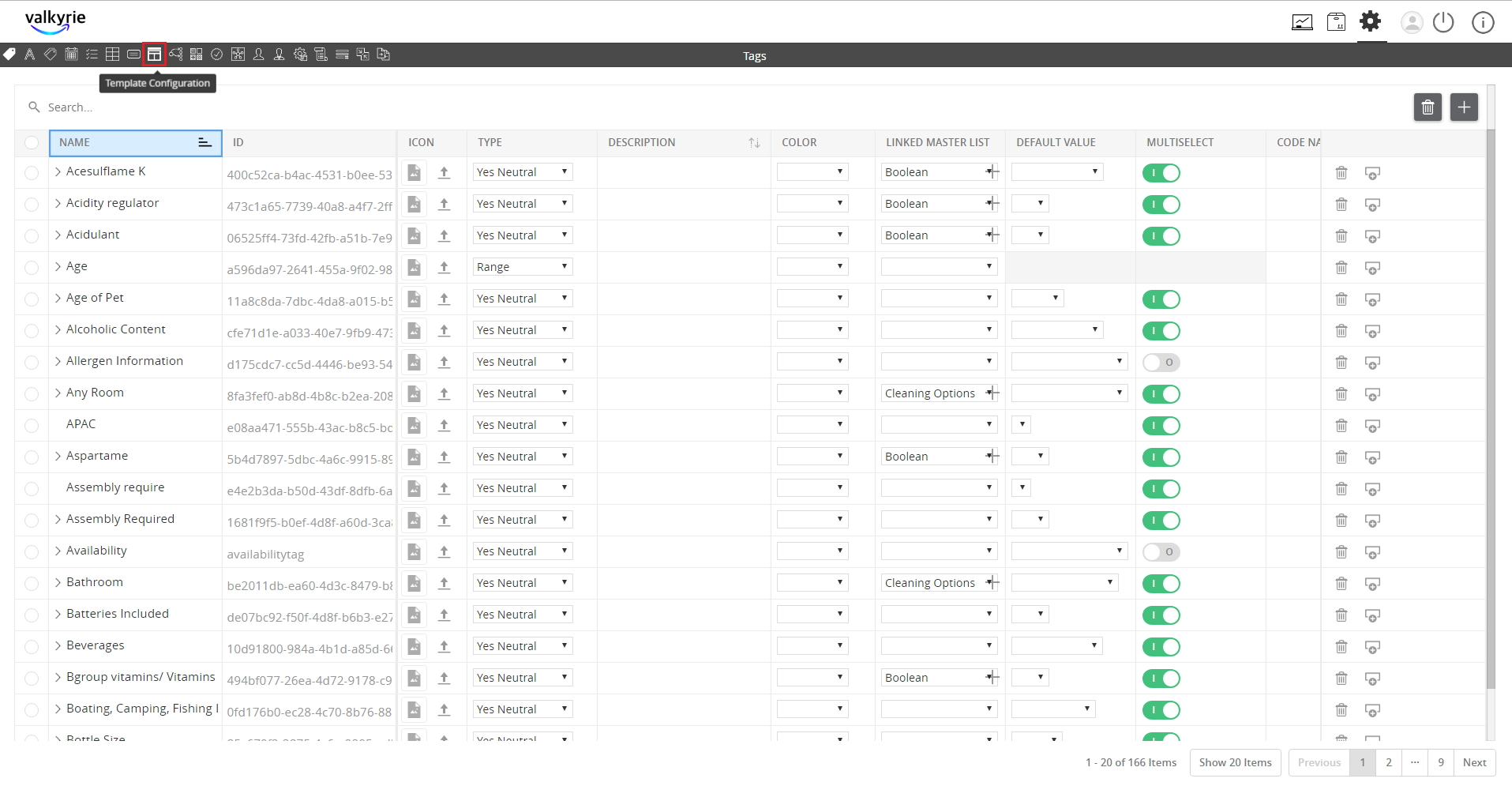
- Click the Template Configuration button.
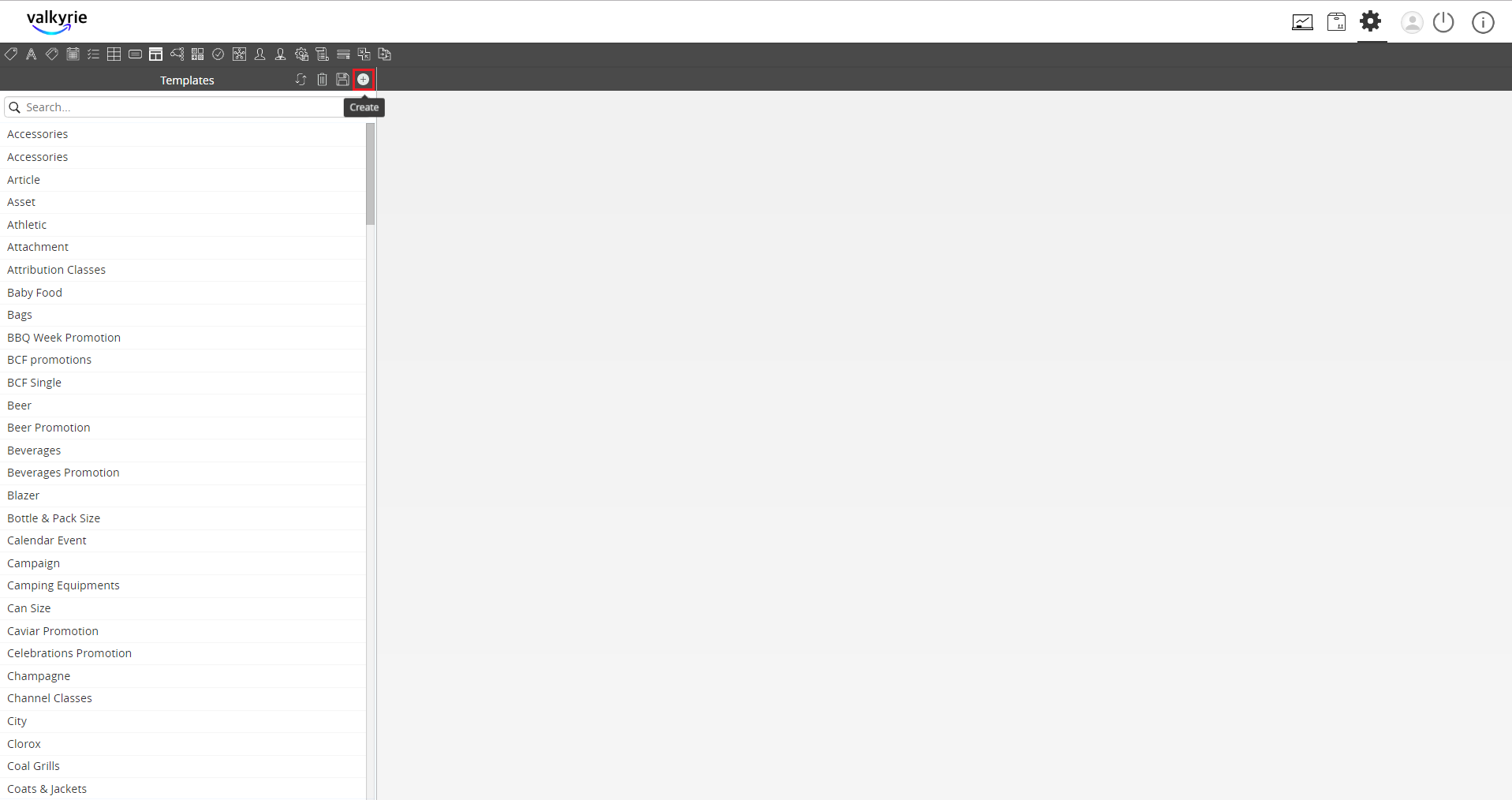
- Click the “+” icon to create a new template. The left pane shows the default templates.
- Enter the name for the template.
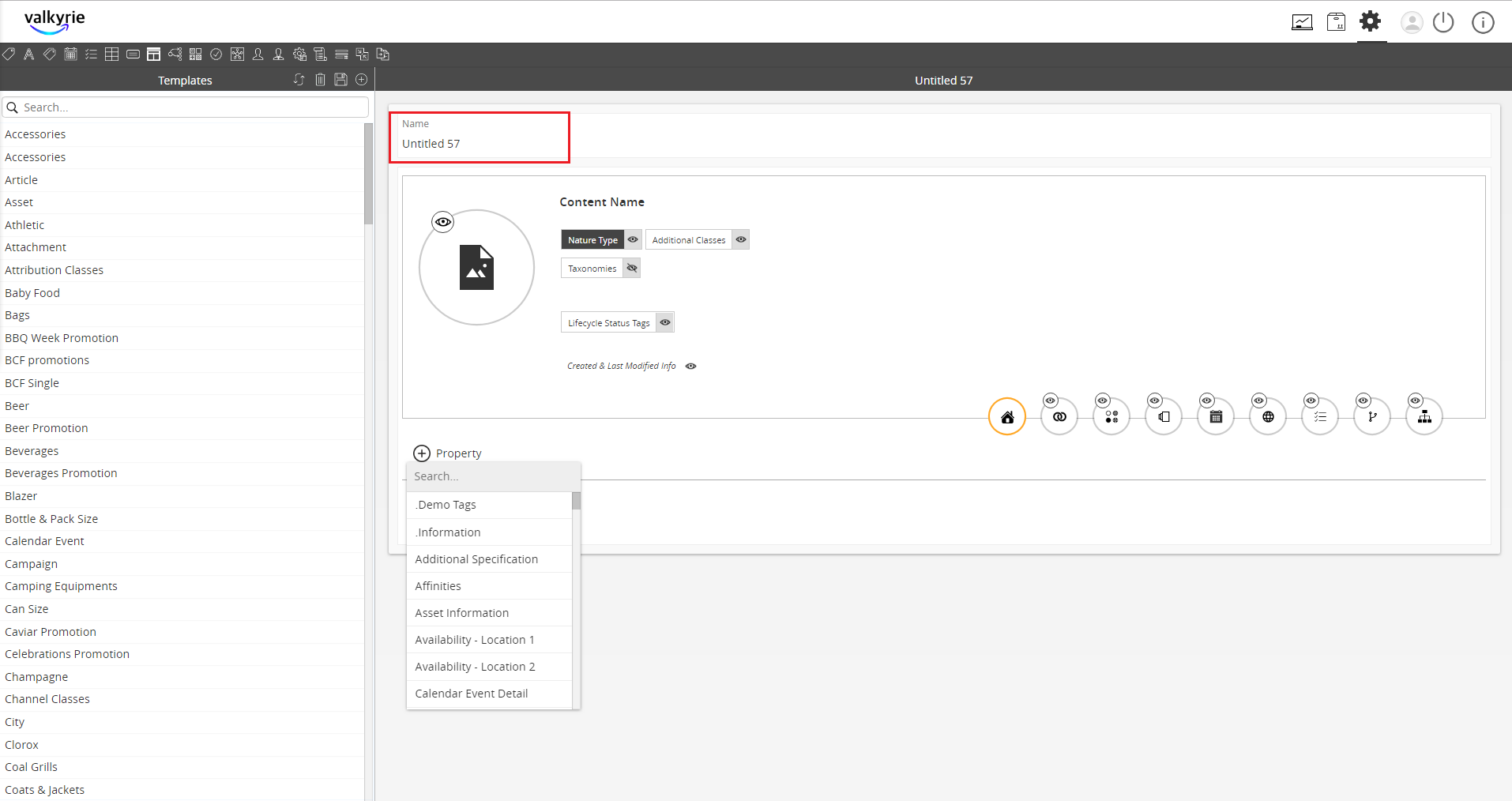
- Click the Eye icon to make the tab visible or hidden. In the image below, the default image is kept visible and the taxonomy is kept hidden.
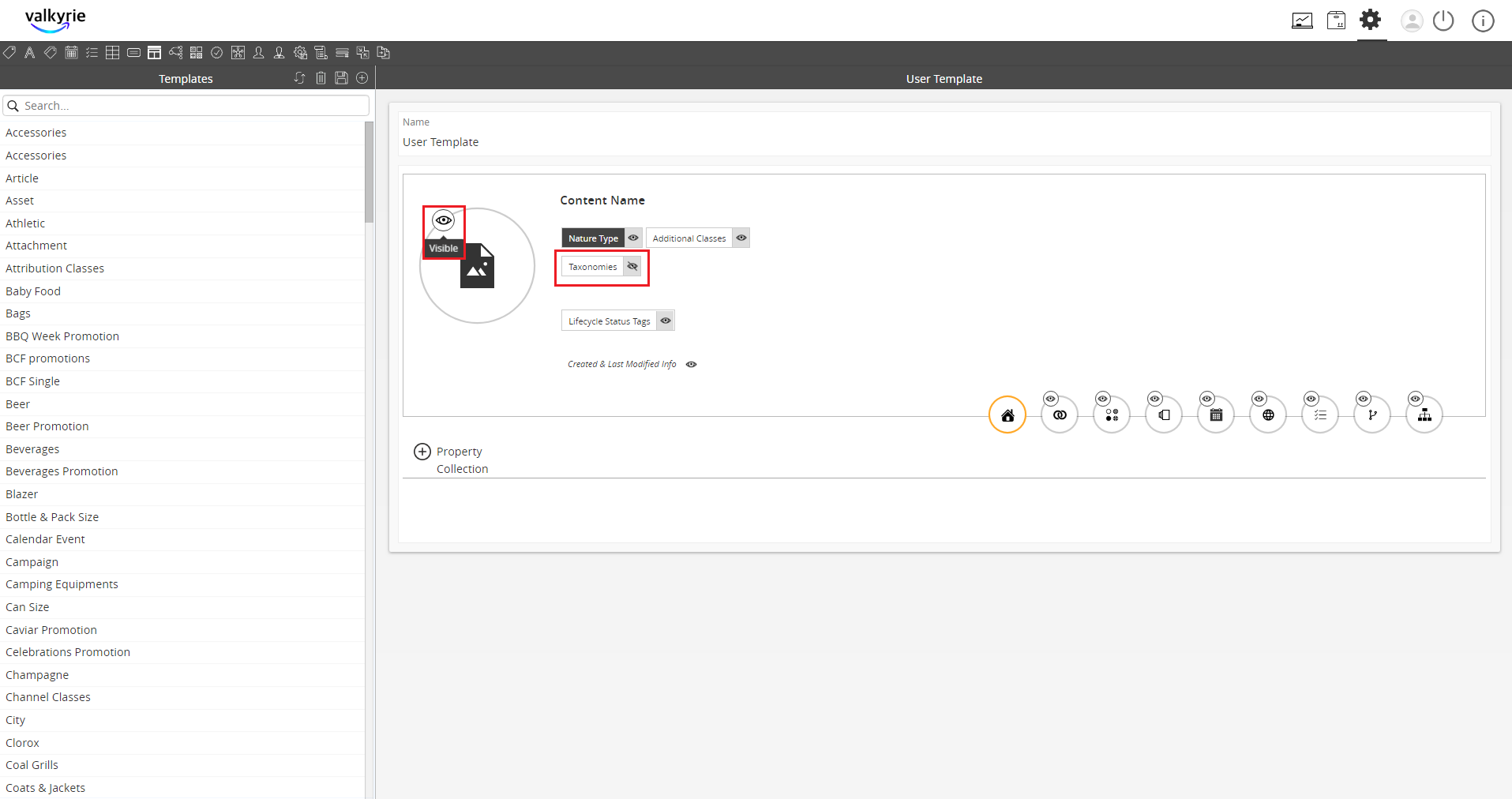
- Click the “+” icon to display a list of all property collections.
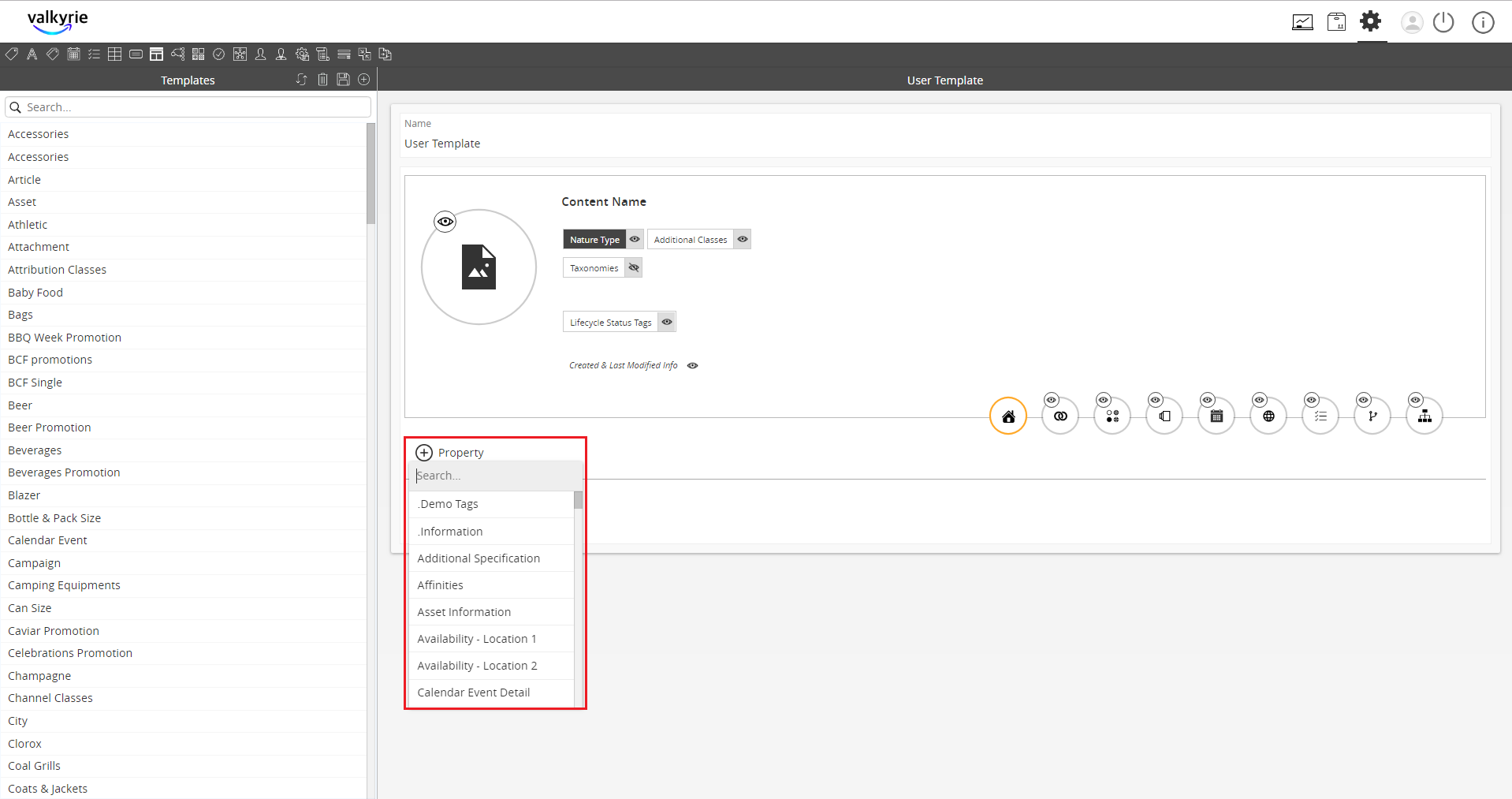
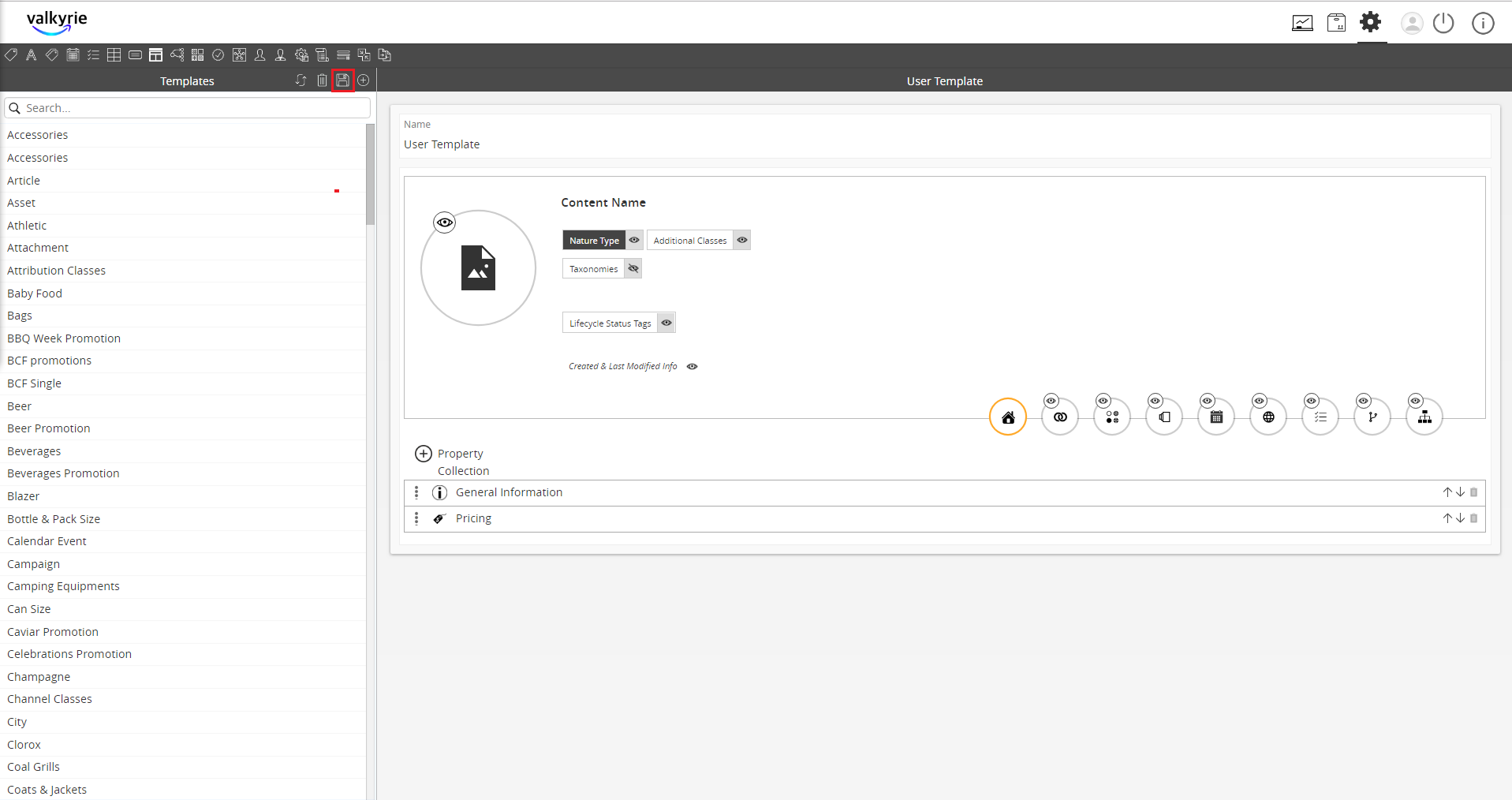
- Select the appropriate property collections and click Save.
- Click the Permissions Configuration button and select a role to which the template is to be assigned.
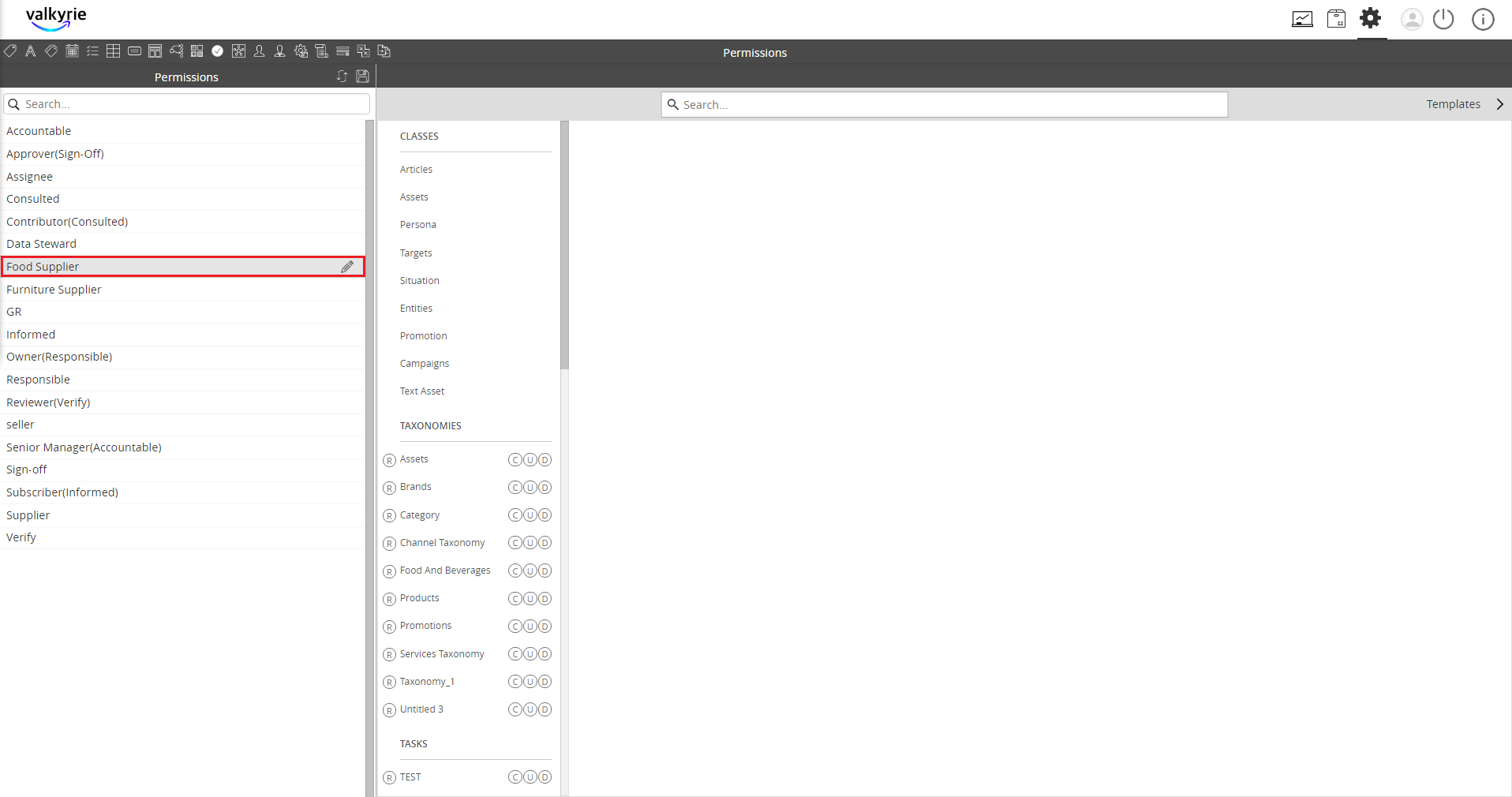
- Select the appropriate class from the list of classes then click the “+” icon to add a template. A green check mark indicates default template.
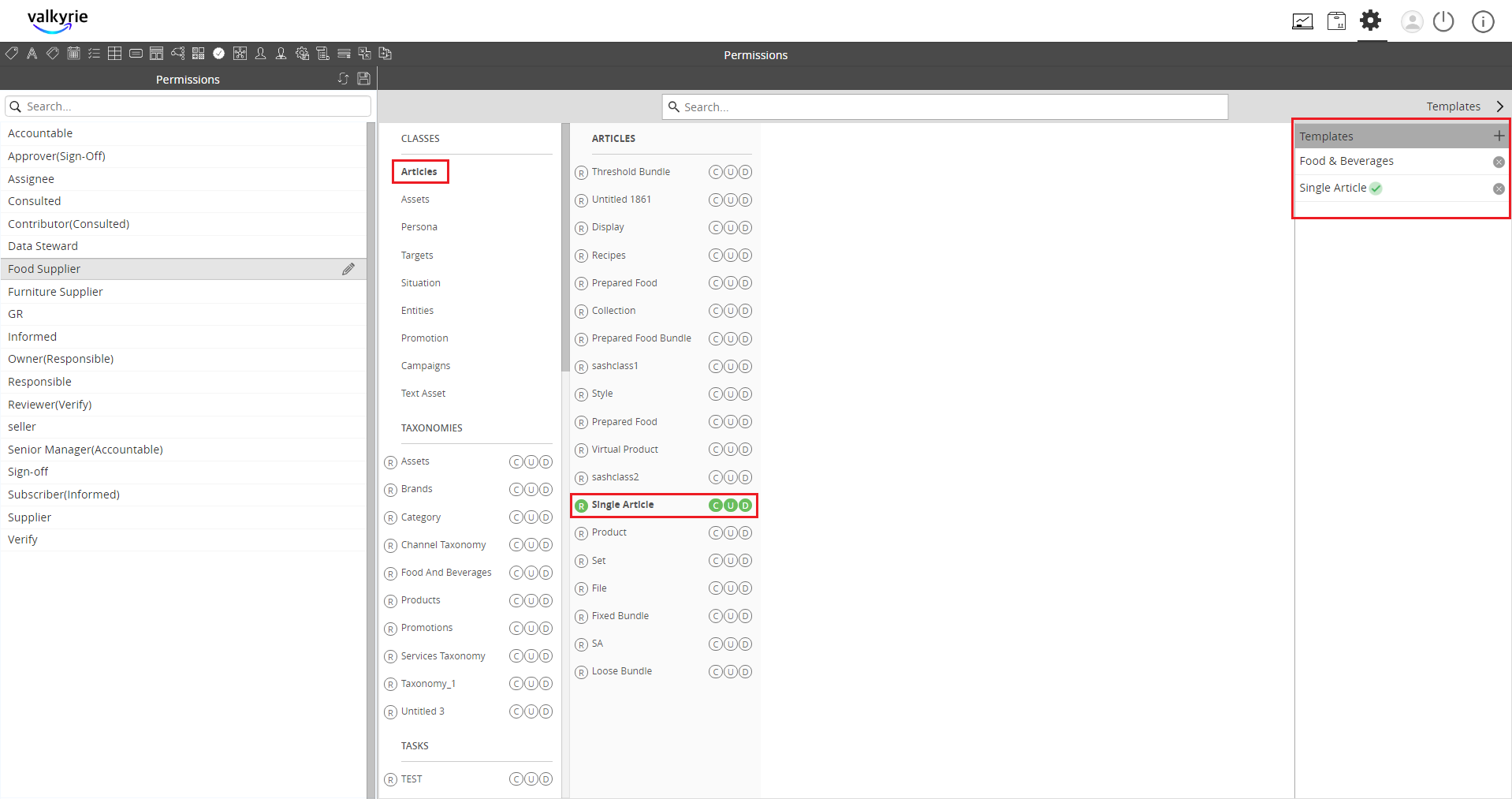
- Add the template in the class and click Apply. On the top right, click Templates.
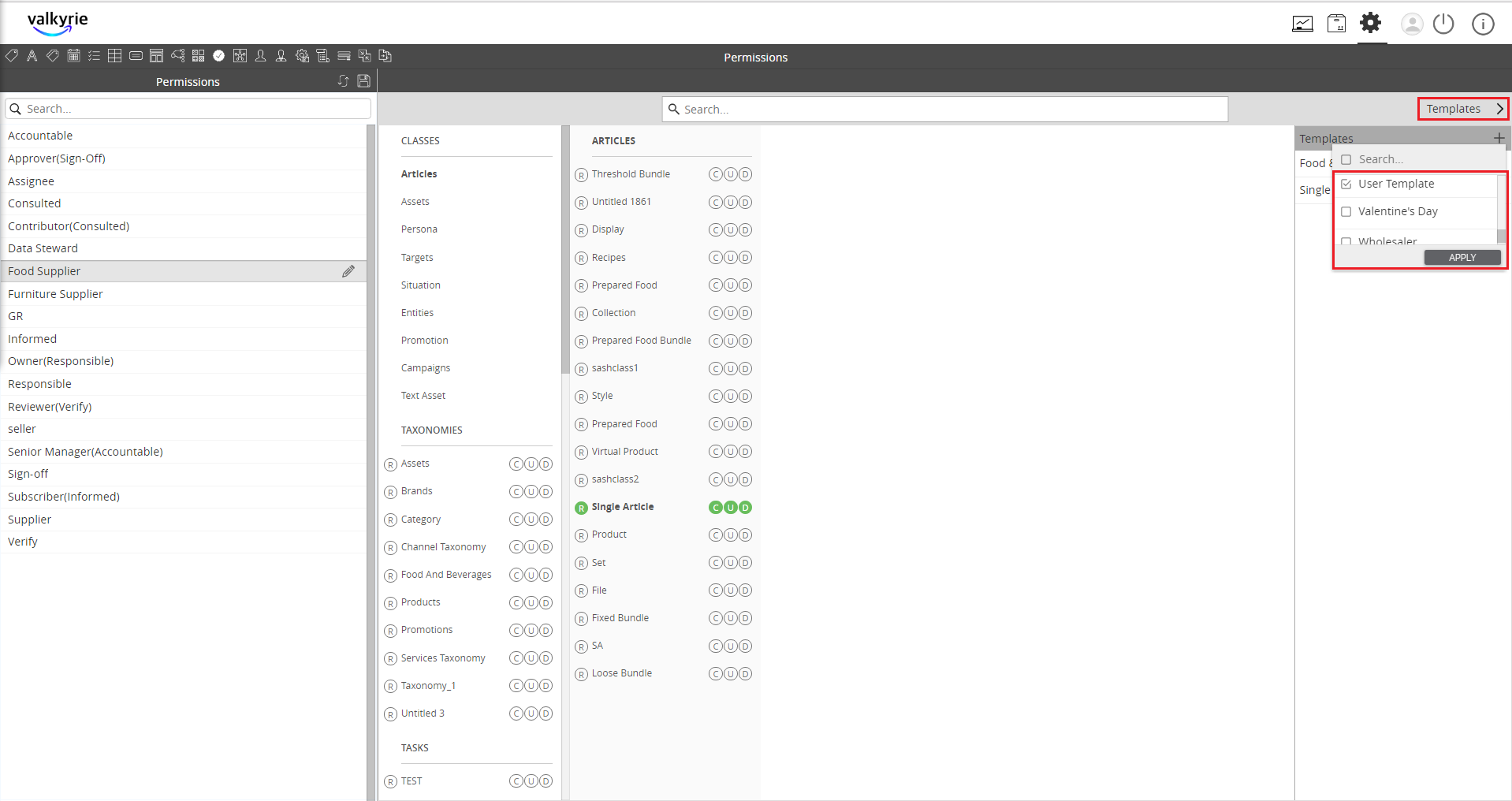
- Select the template.
- To toggle the visibility of the property, click the Eye icon. To edit the rights for the property, click the Pencil icon.
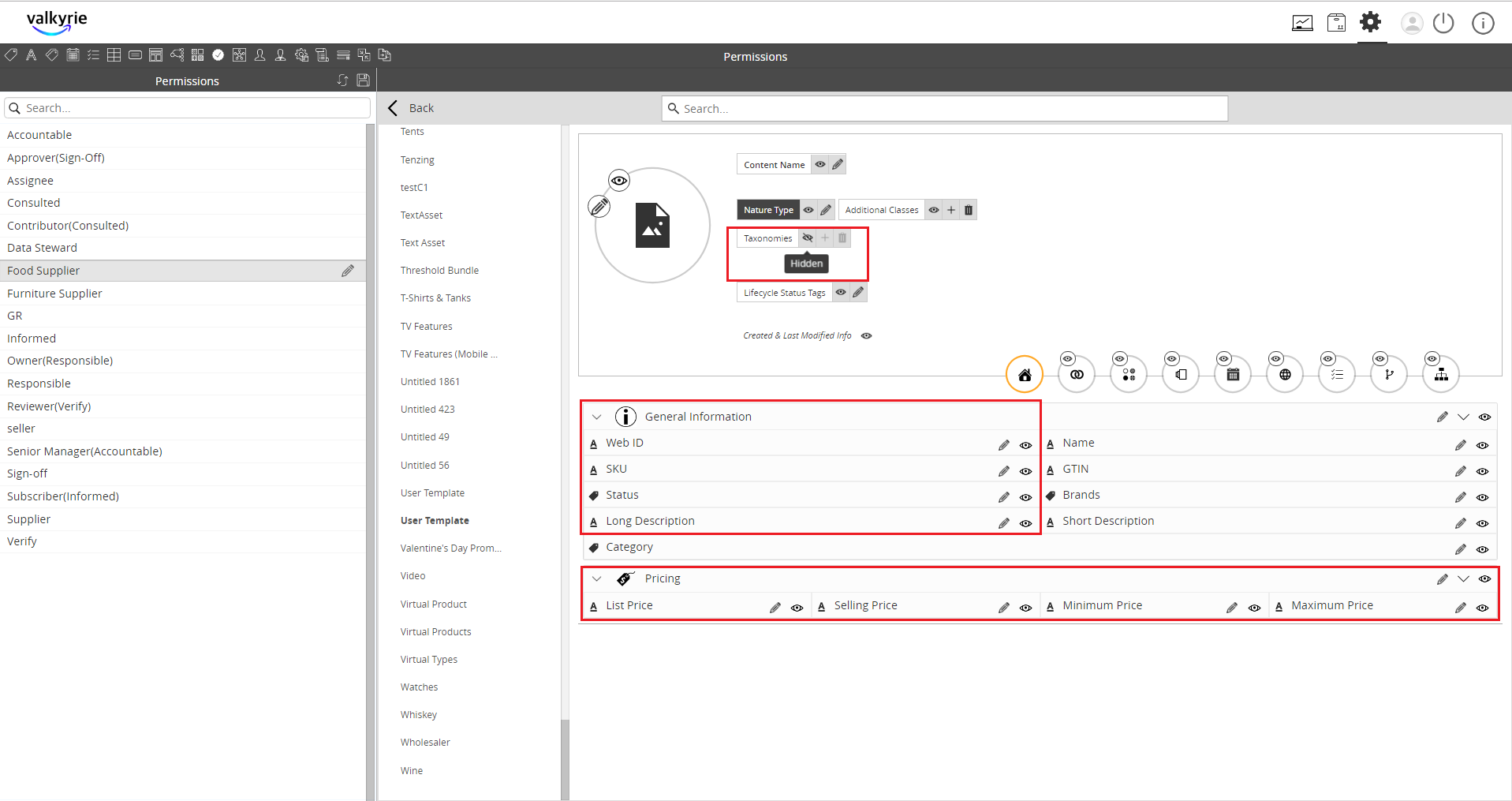
- Select the properties to be non-editable (for example, PID) and hidden (for example, Taxonomy).
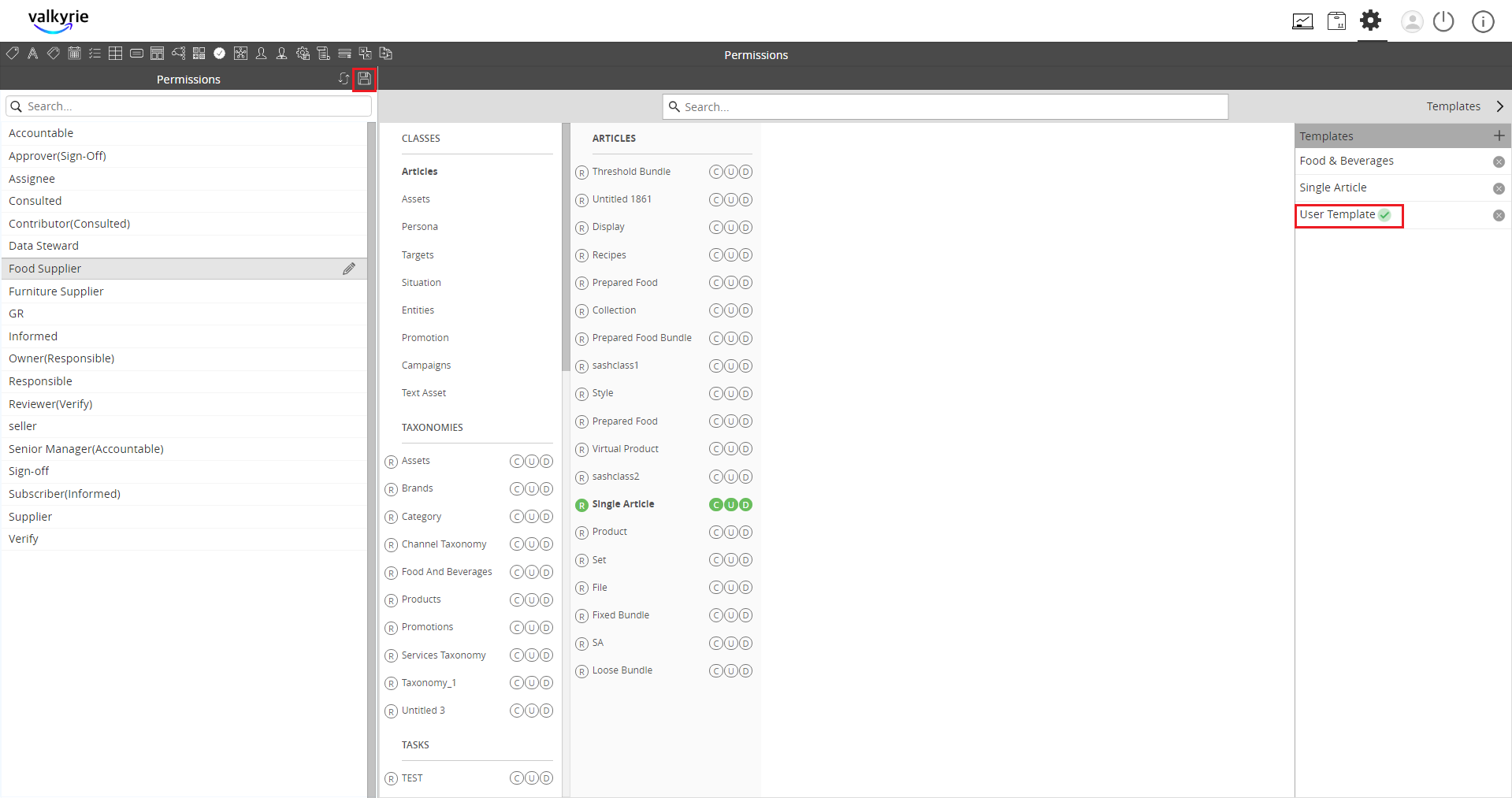
- Set the template as default for the class and click Save.
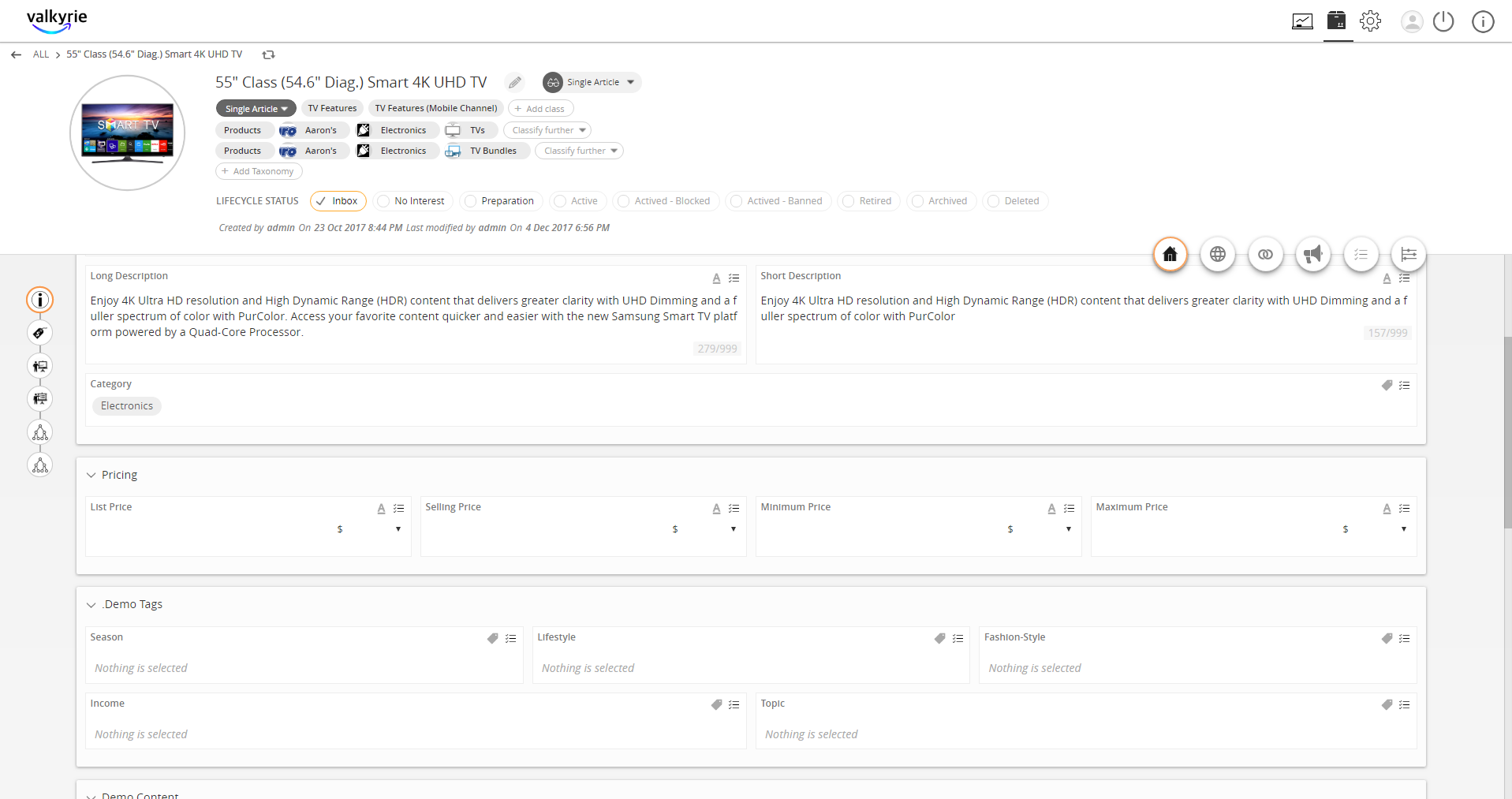
- The image below shows the template where the Taxonomy is hidden and the Pricing section is not editable.

Last updated: Jul 27, 2018